Owning a Patek Philippe is one thing, but selling it without damaging your relationship with the authorised dealer is another. For serious collectors, that relationship can be worth far more than any single watch. This guide walks through the options available, the risks attached to each, and how to navigate the process with both your price and your standing intact.
There are luxury watch brands, and then there is Patek Philippe. Founded in Geneva in 1839, the manufacture has spent nearly two centuries building what is arguably the most controlled, most coveted, and most politically complex distribution network in the entire watch industry. Understanding why requires a brief look at how the brand actually operates.
Patek Philippe is one of only a handful of major watch manufacturers that remains entirely family-owned. The Stern family, who acquired the company in 1932, have resisted every approach from conglomerates and holding groups. That independence shapes everything, including how the brand thinks about who deserves to own its watches.
Unlike most watch brands, Patek does not simply sell to whoever can afford the retail price. Authorised dealers are carefully selected boutiques and independent retailers worldwide act as gatekeepers. They manage waitlists, assess client profiles, and make largely discretionary decisions about who receives allocations of the most sought-after references. This is not just policy; it is philosophy. Patek has long positioned itself as a brand for custodians rather than consumers. The famous slogan "You never actually own a Patek Philippe. You merely look after it for the next generation" is not marketing copy. It is a genuine statement of intent about who the brand believes its customers should be.
This matters enormously for anyone considering selling. Because within this ecosystem, being seen as a flipper, someone who buys at retail and immediately cashes out at a premium, is viewed not just as poor form, but as a violation of the relationship with the AD. And the consequences are real.
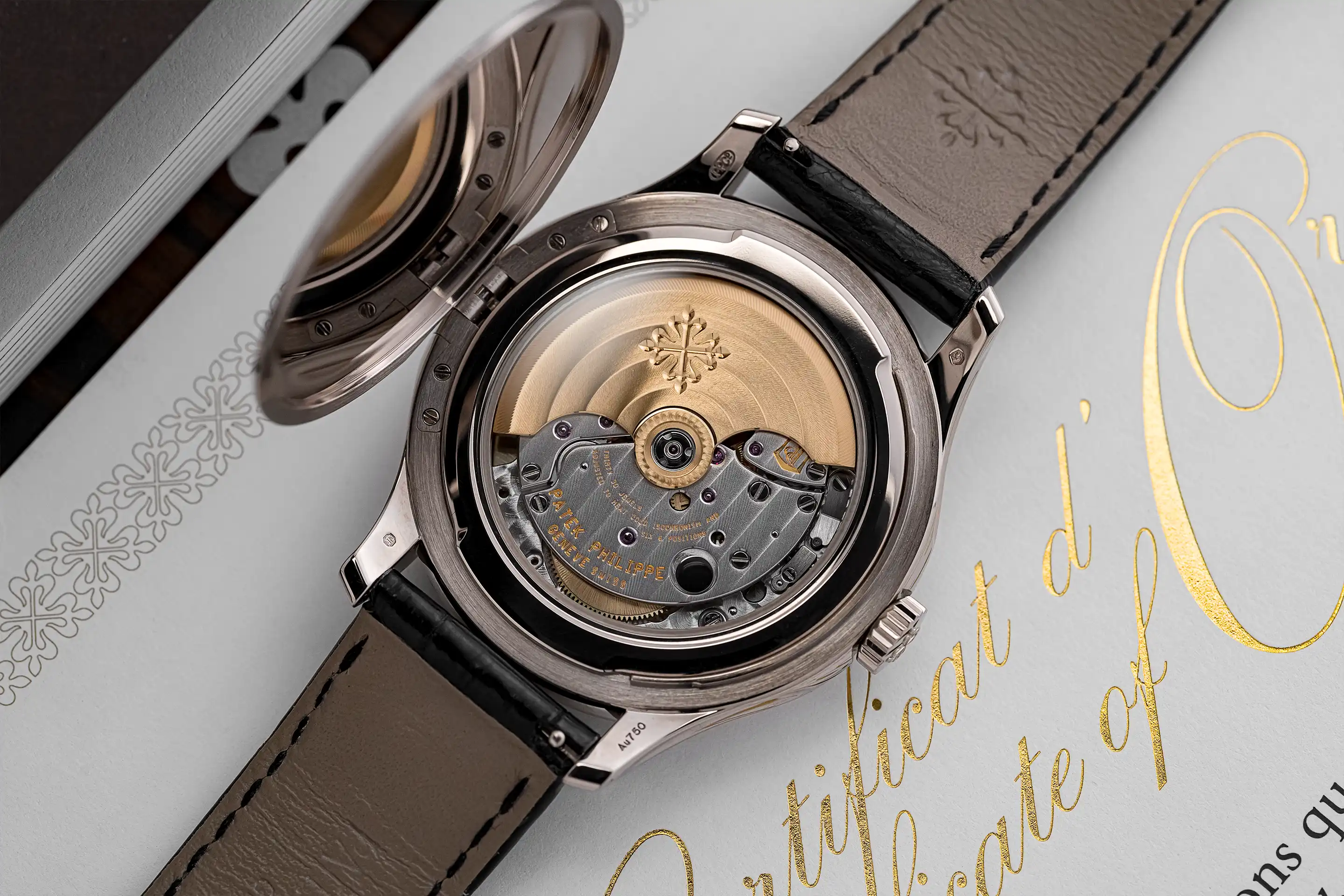
Patek Philippe 5230G-014 World Time
Many collectors assume that once a watch leaves the boutique, it is impossible for the AD to know what happens to it. This assumption is increasingly wrong, and acting on it has cost a number of collectors their allocations.
Every Patek Philippe carries a unique serial number. That number is tied to the purchaser's identity in the dealer's records, and in many cases in Patek Philippe's own internal databases. When a watch appears on the secondary market, whether on Chrono24, Bob's Watches, eBay, or a public social media listing, that serial number is visible. ADs and brand representatives monitor major grey market platforms, and it is straightforward to cross-reference a listing with their sales records.
The scrutiny has intensified since 2021. During the peak of the secondary market frenzy, Nautilus 5711s were trading at three to four times their retail price of around £26,000. Aquanauts were similarly stratospheric. The brand watched a significant number of its "loyal" clients immediately flip pieces they had waited years to obtain. The response was a systematic tightening of client relationships. Several ADs openly communicated to their top clients that reselling quickly would result in removal from waitlists. Some went further, with purchase agreements that included explicit resale restrictions for a defined period.
It is also worth understanding that AD relationships in the watch world are deeply personal. The salesperson who sold you your first Calatrava, the boutique manager who put your name forward for the Nautilus waitlist. These are real relationships built over real time and real money. Losing them is not an abstract punishment. It means losing access to future pieces that, in some cases, cannot be purchased any other way.
The "grey market" is a term that gets used loosely, so it is worth being precise. Grey market watches are not counterfeit, stolen, or illegal. They are genuine pieces that have entered circulation through channels other than the official authorised dealer network. This typically means one of a few things: a collector selling a personal piece, a dealer who sources watches through unofficial channels, or a watch that was purchased in one country and sold in another where it was not officially available.
Grey market pricing is driven entirely by supply and demand. For Patek Philippe, where AD supply is tightly controlled and demand from collectors worldwide vastly exceeds availability, grey market premiums can be substantial. At the time of writing, a steel Aquanaut 5167 retails at approximately £22,000, but commands between £35,000 and £45,000 on the secondary market depending on condition, completeness, and provenance. A Nautilus 5726A retails around £55,000 but trades closer to £70,000–£80,000 in excellent condition.
These premiums are precisely why the temptation to sell exists, and why ADs are motivated to prevent it. A collector who obtains a Nautilus at retail and immediately sells at a £30,000 premium has, in effect, taken that value from the dealer's client relationship rather than earning it through years of brand loyalty.
A direct peer-to-peer sale theoretically offers the highest return, since there is no intermediary taking a margin. In practice, it is the method that requires the most effort and carries the most risk of visibility.
Finding a verified buyer is the first challenge. Trusted watch communities, or closed collector groups do exist, but access takes time to build, and transacting with unknown buyers always carries risk. Arranging a safe meeting, handling large cash payments or bank transfers, and managing the logistics of a private transaction is time-consuming and carries its own liability.
The visibility problem is the more serious one. Listing on any major platform — Chrono24, Watchfinder, eBay, or Instagram — creates a searchable, datable record tied to a specific serial number. Even private forum listings are often crawled or shared. A watch appearing publicly within months of purchase is, in most cases, traceable. The serial number is the digital fingerprint, and experienced ADs know exactly what to look for.
This route works well for collectors who already have a trusted network of buyers, who can transact entirely off-platform, and for whom timing is flexible enough to allow significant time to pass before the piece changes hands.
Working with a professional dealer is considerably faster and considerably more discreet than a private sale. The process is simple: the dealer makes an offer, inspects the watch, and completes the transaction — typically within a single meeting. There are no listings, no public records, and no direct trail back to the original seller.
Because established dealers have international buyer networks, watches acquired in one market regularly move to buyers in another. This geographic movement is a natural form of discretion. The original seller's identity is not attached to it at any point in that journey.
The price offered by a dealer will be below what a private buyer might pay — typically 10–20% less, depending on the reference, condition, and current market. That is the cost of speed, certainty, and privacy. For most collectors selling a Patek, that trade-off is worth it. The certainty of an agreed price, immediate payment, and no exposure is valuable in its own right.
The key is choosing the right dealer. The secondary watch market contains a wide range of operators — from long-established specialist businesses with deep international networks and genuine expertise, to cash buyers operating out of temporary premises with little accountability. The former will offer fair market prices and handle the transaction professionally. The latter may offer low prices and poor security. Due diligence on the dealer is as important as due diligence on the price.
For collectors with a significant, long-standing relationship with a Patek AD in a specific market, particularly the United States, China, Japan, Hong Kong, or the Gulf states, selling through a reputable dealer based in a different country adds a meaningful and well-recognised layer of privacy.
The logic is straightforward. When a watch is sold through a dealer operating in a different national market, it enters a completely separate commercial ecosystem. There is no domestic paper trail connecting the seller to the transaction, and the watch's subsequent movement through international channels makes the original sale essentially untraceable.
London has become one of the most popular destinations for this approach, for several reasons. It has a mature, professional secondary watch market with reputable dealers who have deep expertise in Patek Philippe specifically. It is easily accessible by direct flight from virtually every major city in the world — New York, Dubai, Tokyo, Shanghai, and Hong Kong all have multiple direct connections. Flights are often affordable, and the transaction itself can typically be completed during a short visit, with payment made immediately on inspection. A collector can fly in, complete the sale, and fly out the same day.
The price is agreed in advance of the visit, so there are no surprises or last-minute negotiations on arrival. Translation support is available for collectors whose first language is not English, making the process equally accessible regardless of background. The combination of geographic separation, professional handling, immediate payment, and agreed pricing makes this the preferred route for collectors who place a high value on protecting a long-term AD relationship.
Whether selling privately, through a local dealer, or through a dealer abroad, understanding what drives secondary market pricing for Patek Philippe is essential. The difference between a well-presented piece and a poorly-presented one of the same reference can be tens of thousands of pounds.
A "full set" — original box, inner and outer packaging, certificate of origin, guarantee card, and all original paperwork — can add 15–30% to the value of a piece compared to the watch alone. For a Nautilus or Aquanaut, that can be a difference of £8,000–£15,000. Never sell without the complete set if it can be avoided. If any elements are missing, be transparent about it; a reputable buyer will price accordingly rather than use it as leverage after the fact.
Patek Philippe watches hold their value best when they are in original, unpolished condition. Counterintuitively, an unpolished watch with honest signs of wear will often achieve a better price than one that has been polished, because polishing removes the original surface finish and can blur the sharp edges of the case, a detail that knowledgeable buyers notice immediately. Scratches on the bracelet are generally acceptable. A polished Nautilus is not.
Service history is a double-edged consideration. A watch that has been serviced by Patek Philippe at an authorised service centre carries documentation that supports authenticity and provenance. However, serviced dials or replaced components (particularly hands, indices, or bezels) can affect value if not original. An independent service not carried out by Patek or a reputable watchmaker can raise questions about the movement's integrity.
Not all Patek Philippe references are created equal in the secondary market. The steel sports references, Nautilus and Aquanaut, consistently command the highest premiums over retail. The precious metal dress watches, the Calatrava, the Grand Complications, trade at or sometimes below retail, since their original retail prices already reflect the material cost of gold or platinum. Complications matter: a perpetual calendar or minute repeater in any metal will attract serious collector interest and can achieve strong prices in the right market.
Timing matters too. Secondary market prices for luxury watches have corrected since the peak of 2021–2022. The Nautilus 5711, for instance, traded above £100,000 at its height and has since settled into the £55,000–£70,000 range depending on condition and full set. Selling during a period of strong market demand will always produce better results than selling into a declining market. Following grey market price trends for specific references is worth the effort before agreeing a price.
It is worth being clear: selling a watch you legally purchased is entirely lawful. Resale restrictions included in some purchase agreements are civil contractual matters between the buyer and the AD, not criminal provisions. In the UK, resale price maintenance of this kind is generally unenforceable in law. The risk of selling is not legal — it is relational. The consequence is losing access to future allocations, not any form of prosecution.
Similarly, selling through grey market channels or through dealers abroad is entirely legal. The grey market for luxury watches operates openly and professionally in the UK and across most major markets globally. There is no regulatory or legal obstacle to selling a personally-owned watch through any of the channels described in this guide.
The one area requiring care is taxation. In the UK, profits from selling personal possessions are generally exempt from Capital Gains Tax up to £6,000 per item (as of 2024). Above that threshold, gains may be taxable. For watches that have appreciated significantly, a Nautilus purchased at retail that is now worth considerably more, it is worth taking advice from a tax professional before completing a sale.
The team at Finer Lux has extensive experience acquiring Patek Philippe and other fine watches discreetly and professionally. All valuations are confidential, obligation-free, and based on current market rates. Prices are agreed in advance — no surprises on the day.
10/08/2026·Kaitlyn Dotson
Thinking about servicing your Patek Philippe? From a simple strap change to a full complication overhaul, here's what owners can expect to pay in the UK — broken down by service type, with real-world examples of which models typically need each one.
26/06/2026·Kaitlyn Dotson
The tachymeter is the scale most people notice on a chronograph and the one fewest know how to use. Here is how it actually works, what the numbers mean, and the racing history that made it the signature of the Rolex Daytona.
23/06/2026·Kaitlyn Dotson
Every summer the world's oldest tennis tournament turns a corner of south west London a vivid shade of green, and on the wrist of its champions sits a crown. This is the story of Rolex and Wimbledon, the slate and green Datejust collectors prize, and what one costs today in sterling.
11/06/2026·Kaitlyn Dotson
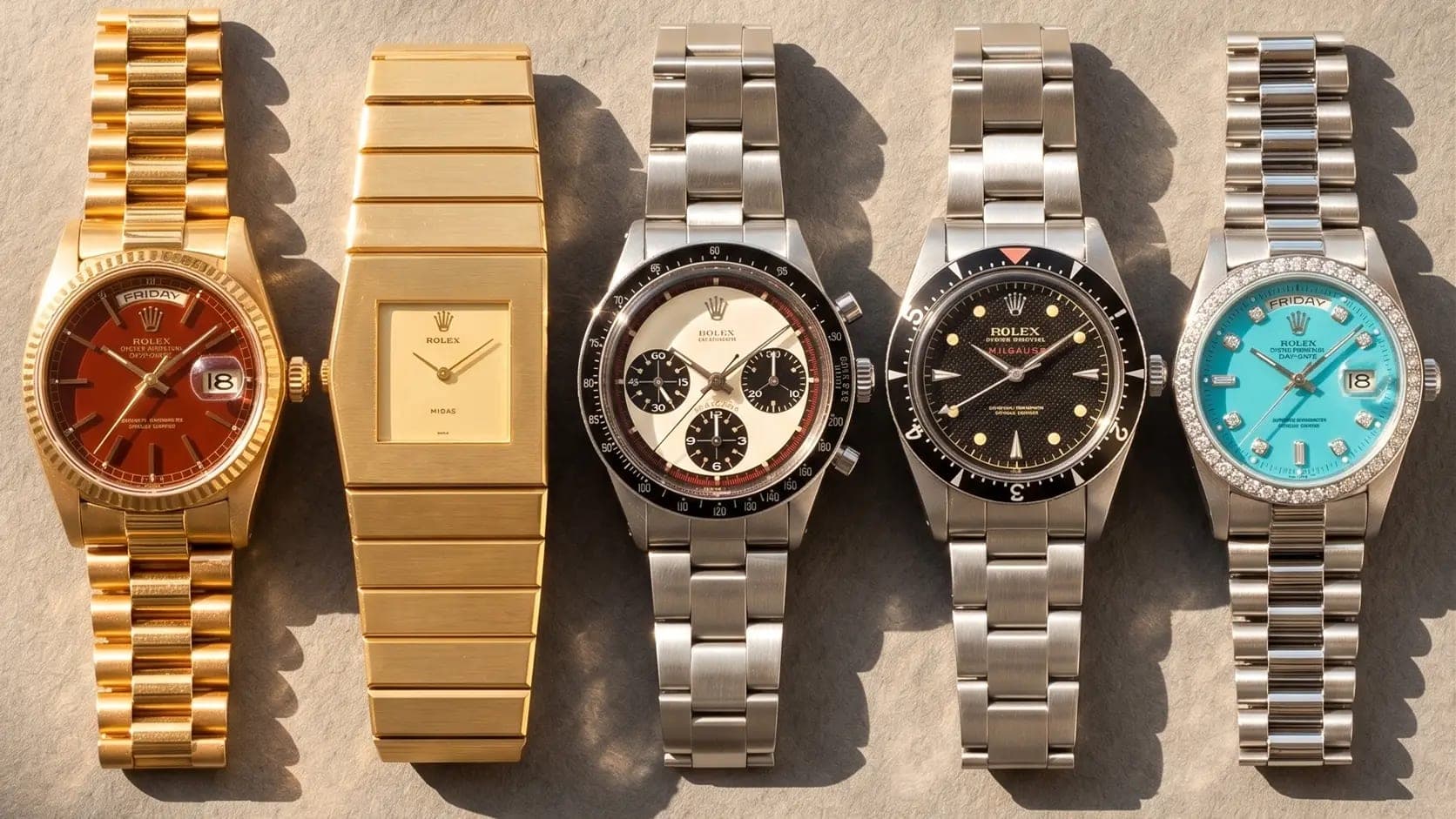
Rolex built its reputation on precision, prestige, and performance. Yet scattered throughout the brand's century-long history are watches so unusual, so experimental, or so short-lived that even seasoned collectors do a double-take. From a Rolex powered by a quartz movement to dials painted in colours that look lifted from a Caribbean sunset, these are the watches that tell a very different story about one of the world's great watchmakers.
29/05/2026·Kaitlyn Dotson
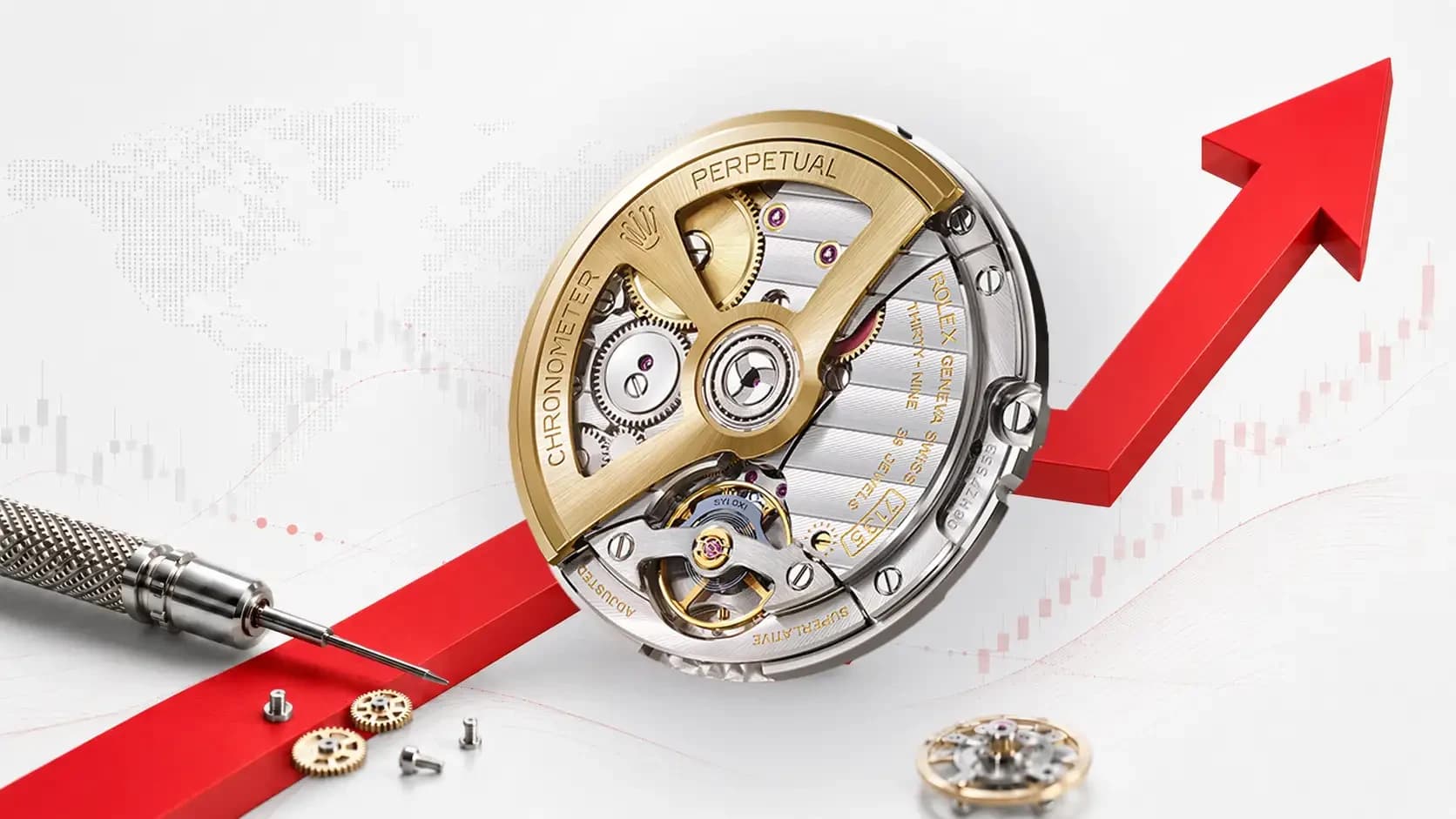
Following the official price update effective February 2026, a modern Rolex costs between £550 and £780 to service, classic five digit references run from £830 to £1,190, and vintage four digit pieces range from £1,380 to £7,350. Every official overhaul also includes a two year guarantee. Full official price tables, likely extra part costs, and what the service involves are all below.
21/05/2026·Kaitlyn Dotson
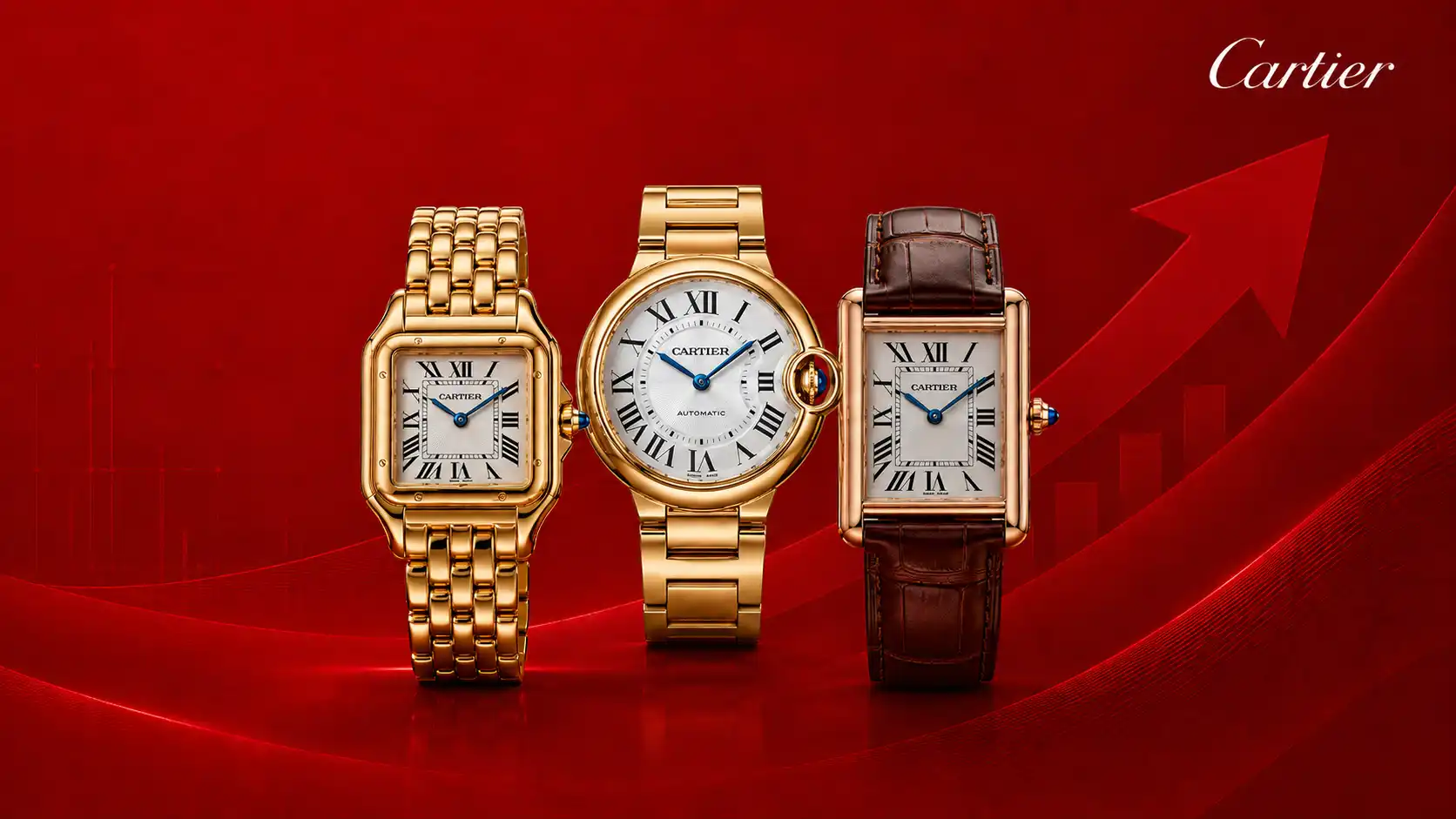
Cartier has lifted its US watch prices as of 21 May 2026, with most icons climbing around 14–18% on top-end gold and diamond-set models. Here's exactly what's changing, why it's happening, which watches feel it most, whether the jewellery could be next, and why the smart money may already be looking at the pre-owned counter rather than the boutique window.
19/05/2026·Kaitlyn Dotson
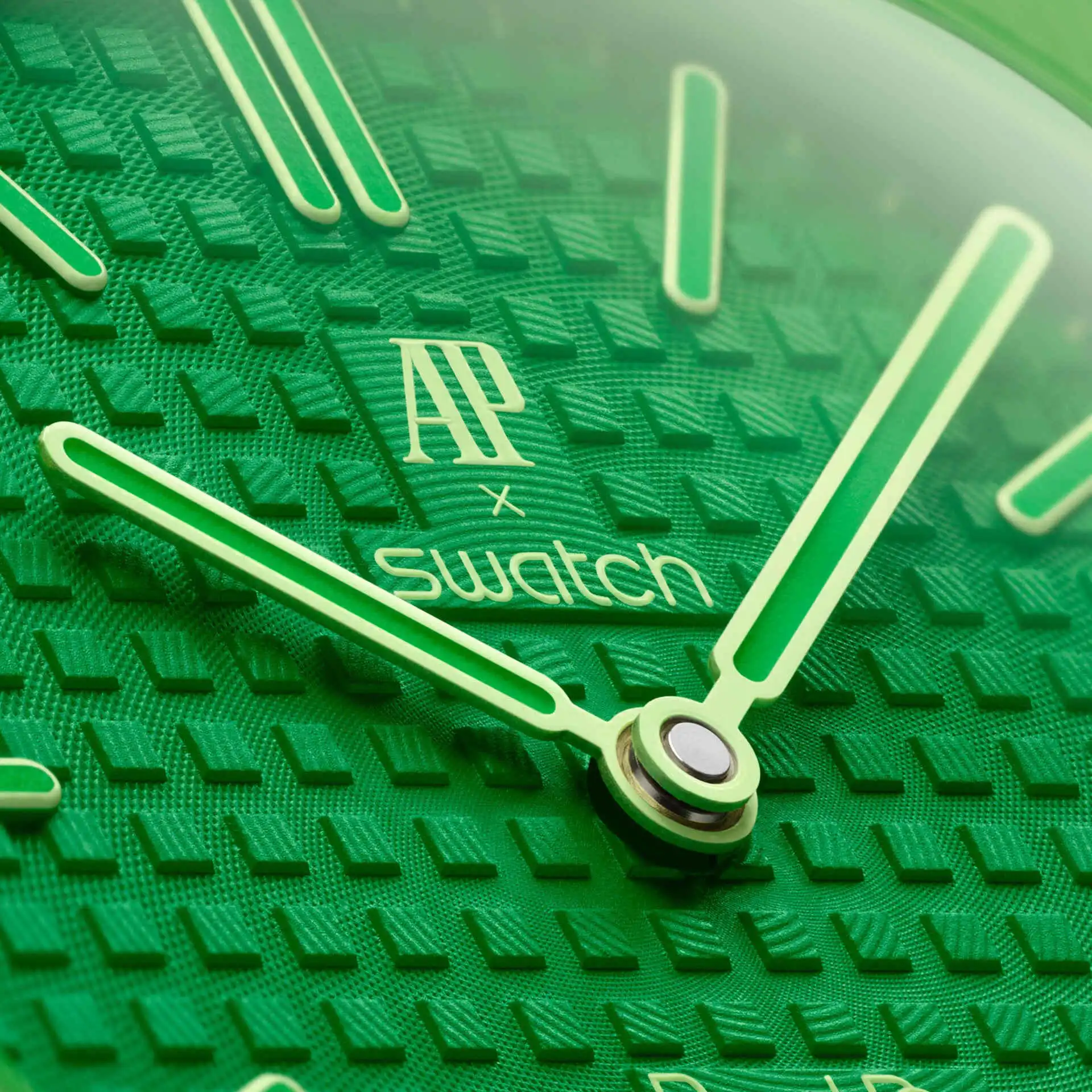
Audemars Piguet has quietly done something it has never done in fifty years — licensed the Royal Oak's design language to another watchmaker. Gone is the assumption that the octagonal bezel and eight hexagonal screws belong only to Le Brassus. In its place is the Royal Pop, eight Bioceramic pocket watches launched with Swatch that triggered 300-person queues, store closures, and £15,000 eBay asks within hours. If you're wondering whether to chase one, the picture three days later is very different from launch day.
28/04/2026·Kaitlyn Dotson
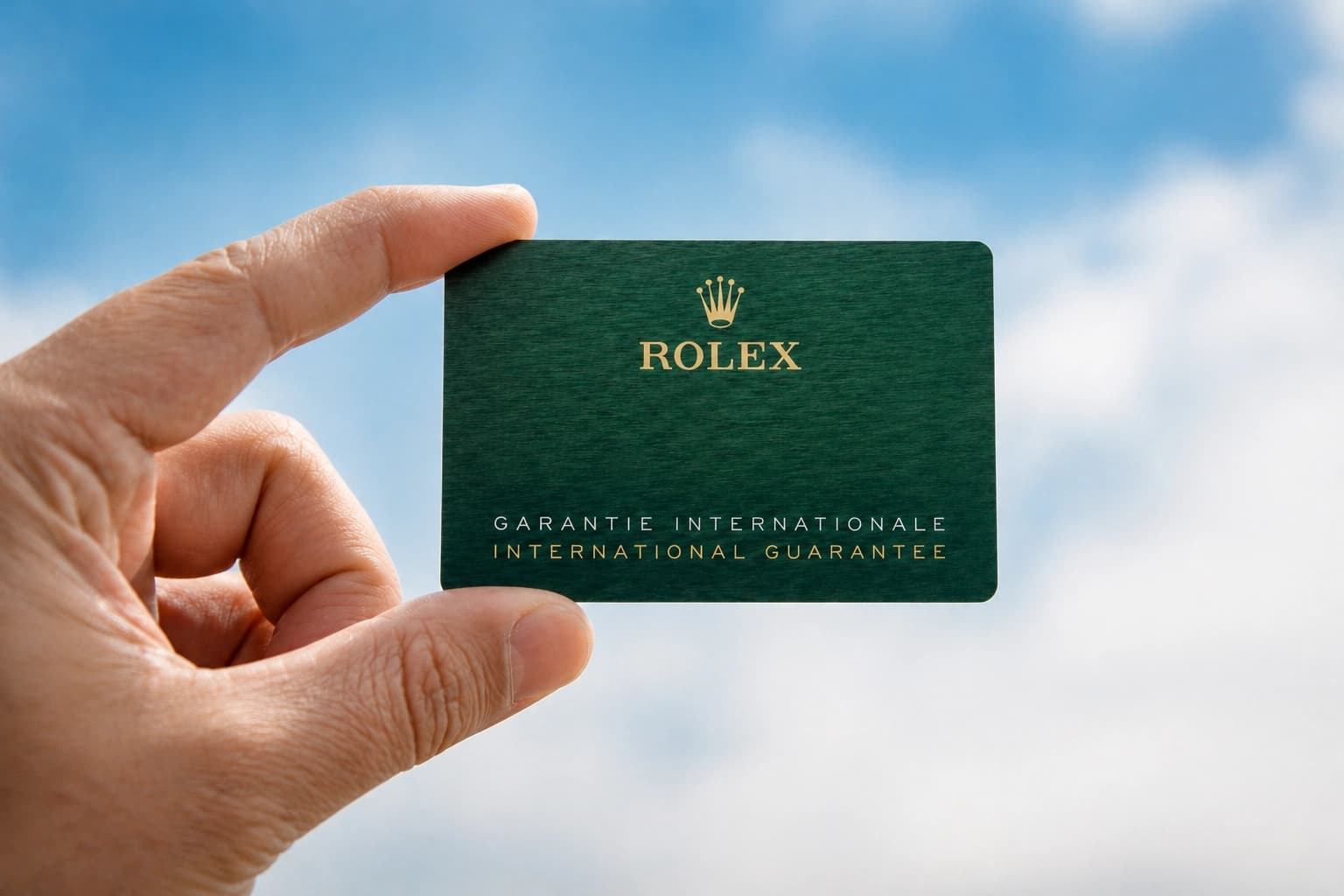
Rolex has quietly changed the documents that prove a watch is real. The 2026 warranty card and hang tag now share a green wood-grain finish, joined by a hidden line of defence against counterfeiters. Here is what changed, why it matters, and how to read the new set.
24/04/2026·Kaitlyn Dotson
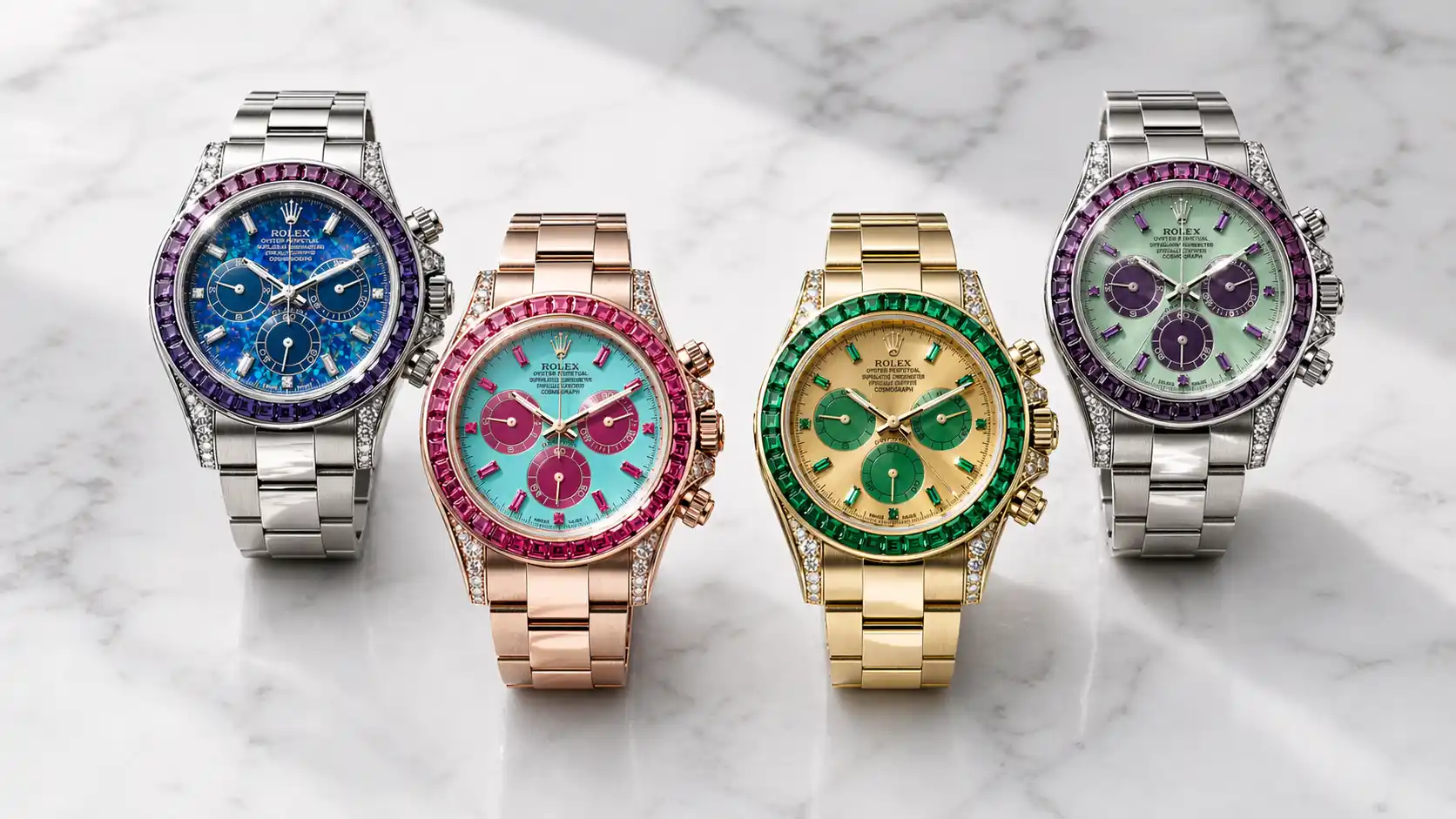
Around Watches & Wonders Geneva 2026, Rolex quietly introduced four gem-set Cosmograph Daytona references that won't appear on any website, won't be shown to journalists, and won't be offered to walk-in clients. References 126595SARO, 126596SABV, 126598TML, and 126599SAVL, each built around a different precious metal and an entirely distinct colour story, are among the most significant Daytona releases in years.
14/04/2026·Kaitlyn Dotson
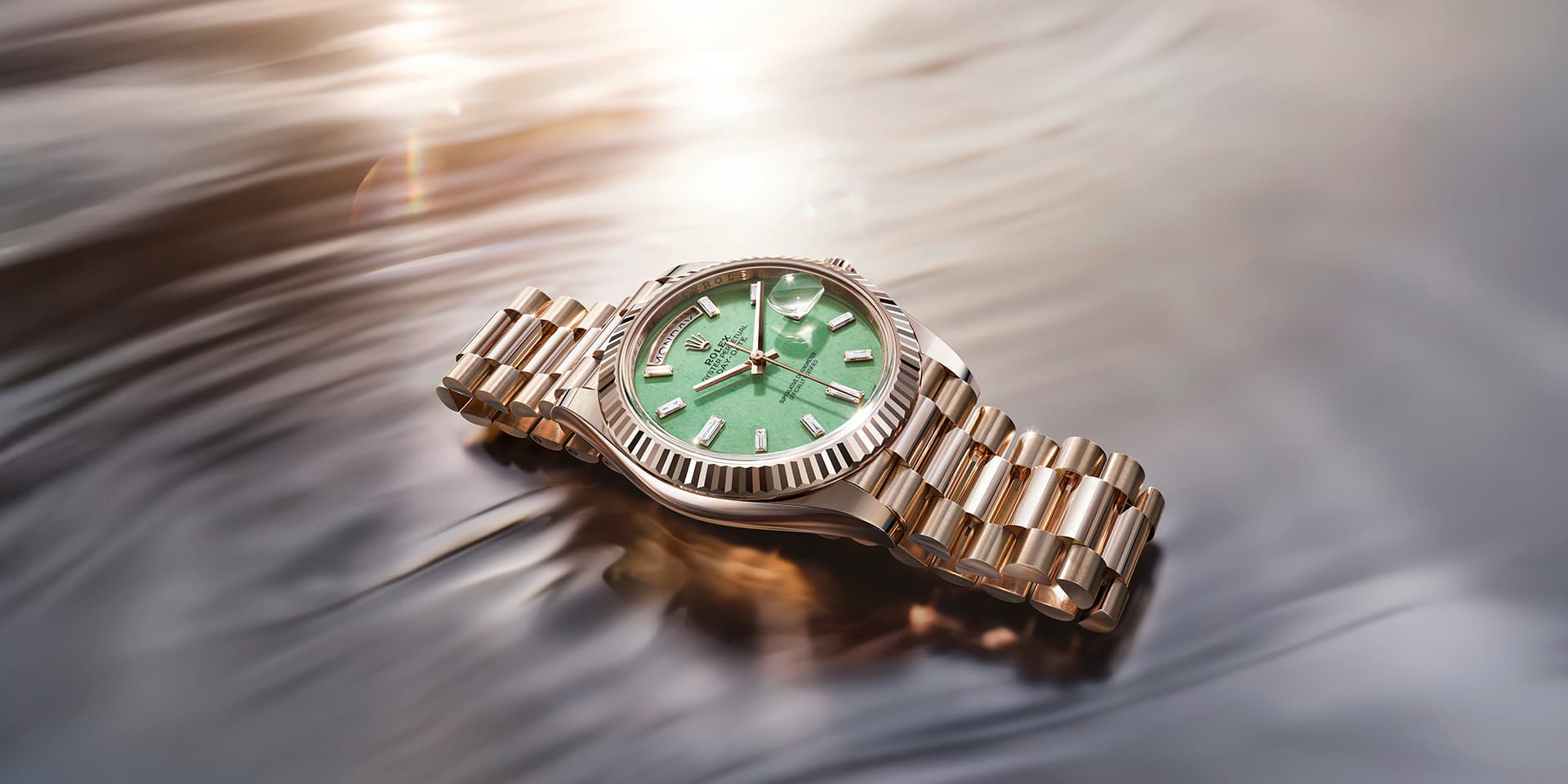
Six releases, 56 new references in standard catalogue and 2 off-catalogue — Rolesium Cosmograph Daytona and Day-Date 40. One historic anniversary, and some of the most technically impressive watches Rolex has ever put out. We've covered them all: from a completely rebuilt regatta chronograph with a brand-new movement, to precious metal Oyster Perpetuals featuring natural stone hour markers for the very first time. 2026 is shaping up to be one of the most exciting years in Rolex's history, and there's plenty to get enthusiastic about — whether you're a seasoned collector or just getting started on your watch journey.
08/04/2026·Kaitlyn Dotson
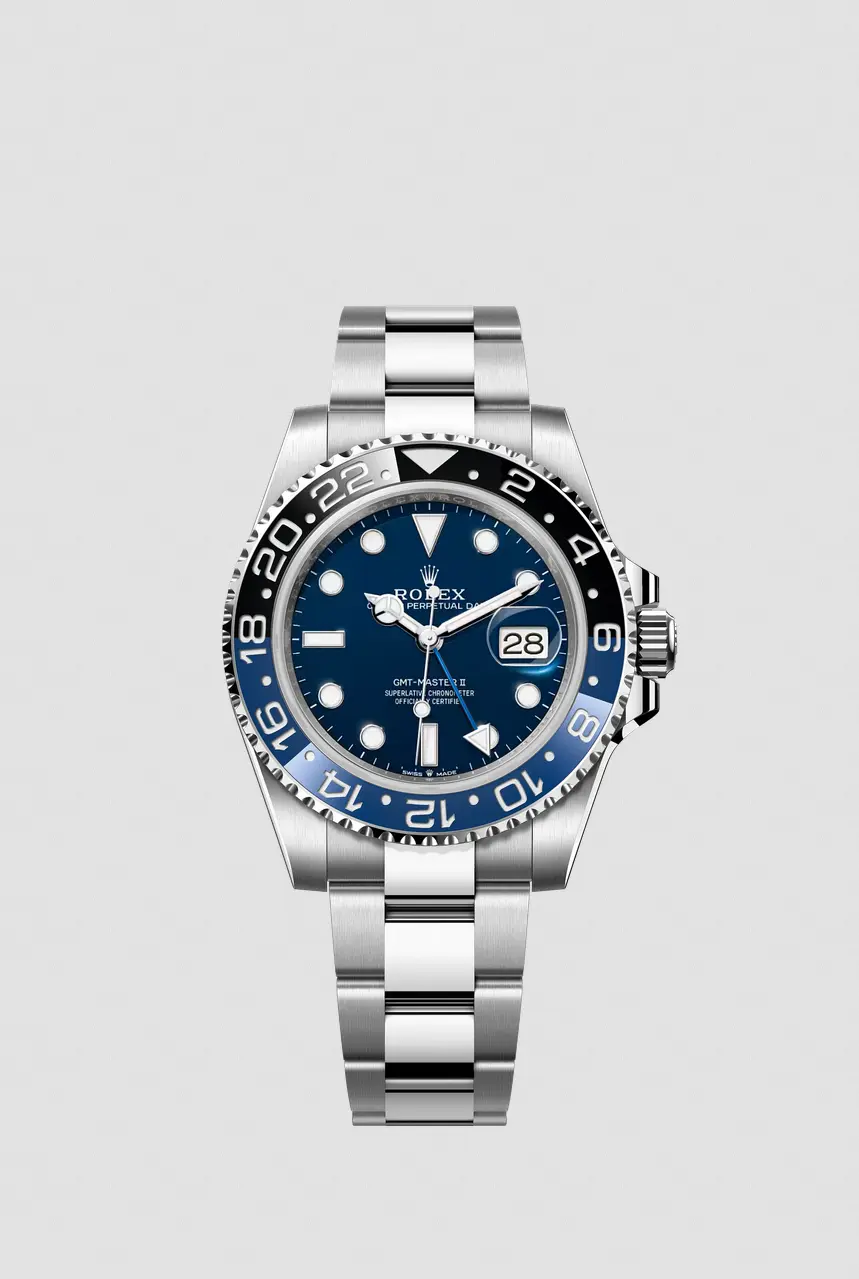
Watches & Wonders 2026 opens in Geneva on 14th April, and at Finer Lux, we believe this year's edition is unlike anything we've seen in our 20 years in the industry. The Holy Trinity under one roof for the first time. We've been watching the signals — here are our predictions for the biggest watch event of the year.